


Understanding load distribution, dynamic forces, and practical strategies for safer entertainment rigging
Every stage truss has a rated capacity.
Yet one of the most common misconceptions in entertainment rigging is that staying below this number automatically guarantees a safe installation.
In reality, truss overload is rarely caused by simply adding "too much weight."
More often, it results from uneven load distribution, inaccurate assumptions, last-minute production changes, dynamic movement, or improper installation practices.
A truss may remain below its overall rated capacity while individual suspension points, connection points, or structural sections experience loads that exceed their intended limits.
That’s why preventing truss overload requires more than knowing the total weight of the suspended equipment.
It requires understanding how that weight is distributed, how it changes throughout a production, and how engineering assumptions compare to actual operating conditions.
In this guide, we'll explore the most common causes of truss overload and the practical strategies production teams can use to reduce risk before and during live events.
What is truss overload?
Truss overload occurs when all or part of a truss experiences forces beyond the limits it was designed for.
Importantly, this does not always mean the total suspended weight exceeds the published capacity.
Overload may occur due to:
- Loads being concentrated in one area.
- Unevenly loaded suspension points.
- Dynamic forces increasing stress during movement.
- Equipment being installed differently than originally engineered.
- Additional loads being introduced during production.
Understanding where loads are applied is often just as important as understanding how much weight is suspended.
Why truss overload happens
Most overload situations develop gradually rather than suddenly.
Several factors commonly contribute to increased structural loading.
Uneven load distribution
Two trusses carrying the same total weight may experience very different structural stresses depending on where equipment is positioned.
For example:
A large LED wall suspended near the center of a span creates different forces than the same weight distributed evenly across multiple suspension points.
Similarly, relocating loudspeaker arrays or lighting fixtures without updating the rigging plan may unintentionally shift loads toward one section of the structure.
Even relatively small changes can significantly alter load distribution.
Last-minute production changes
Live productions evolve constantly.
Lighting designers add fixtures.
Video departments install additional LED panels.
Scenic elements change during rehearsals.
Audio systems are reconfigured.
While each individual change may appear minor, together they can affect the structural behavior of the rigging system.
This is why engineering documentation should always reflect the current production configuration—not the original design alone.
Incorrect weight assumptions
One of the simplest and most preventable causes of overload is inaccurate weight information.
Manufacturers typically provide equipment specifications, but actual installed weight may differ because of:
- Rigging hardware
- Safety cables
- Cabling
- Mounting accessories
- Protective enclosures
- Touring modifications
Using verified equipment weights improves the accuracy of engineering calculations and helps reduce unexpected load redistribution.
Dynamic loads
Many suspended systems remain in motion throughout a production.
Examples include:
- Automated lighting trusses
- Flying scenery
- Performer flying systems
- Motorized LED walls
- Stage automation
- Kinetic stage elements
Movement introduces dynamic forces that differ from static loading conditions.
Although engineering calculations account for expected operating conditions, continuous verification helps engineers understand how loads behave during actual movement.
Environmental conditions
Outdoor productions face additional challenges.
Wind acting on large LED walls, banners, scenic elements, or temporary roof structures can significantly increase truss loads.
Environmental conditions should always be considered during engineering, installation, and operational planning.
Communication gaps
One department modifies the lighting plot.
Another changes the audio configuration.
A third adjusts scenic positioning.
If these changes are not communicated across departments, engineering assumptions may no longer reflect the actual installation.
Many overload situations originate not from technical failures, but from communication failures.
Myth vs. reality
One of the most valuable ways to understand truss loading is to separate common assumptions from engineering reality.
|
Myth |
Reality |
|
If the total suspended weight is below the truss rating, the installation is always safe. |
Load distribution may overload individual sections or suspension points even when the total weight remains within limits. |
|
Static calculations tell the whole story. |
Dynamic movement, production changes, and environmental conditions can alter load behavior during operation. |
|
If the truss looks level, everything is balanced. |
Visual appearance does not always reflect internal load distribution. |
|
Truss overload is only a concern for large arena shows. |
Smaller productions can also experience overload conditions if loads are improperly distributed. |
|
Once rehearsals begin, the rigging configuration rarely changes. |
Productions frequently evolve during rehearsals, requiring ongoing verification. |
Understanding these misconceptions helps production teams make more informed decisions throughout the event lifecycle.

Warning signs that should never be ignored
Although many structural changes cannot be identified visually, certain warning signs deserve immediate attention.
These may include:
- Unexpected truss deflection
- Uneven chain motor loading
- Abnormal movement during automation
- Visible twisting of structural elements
- Unexpected alarm events from monitoring equipment
- Changes in equipment configuration that were not part of the original engineering plan
Whenever unexpected conditions are observed, production teams should pause and evaluate the situation before continuing operations.
💡 Expert tip
Truss overload is often the result of multiple small changes rather than one major mistake. Reviewing equipment modifications throughout installation is just as important as reviewing engineering calculations before the project begins.
Best practices for preventing truss overload
There is no single action that completely eliminates the risk of truss overload.
Instead, safe rigging depends on combining sound engineering, disciplined installation procedures, effective communication, and continuous verification throughout the production.
The following best practices are widely recognized across the entertainment industry and can help reduce the likelihood of unexpected loading conditions.
Start with accurate engineering data
Every safe rigging installation begins with reliable information.
Before equipment arrives at the venue, verify that the engineering package includes:
- Current rigging plots
- Confirmed equipment weights
- Suspension point capacities
- Truss specifications
- Load calculations
- Motor capacities
- Venue-specific structural information
Engineering calculations are only as accurate as the information used to create them.
Whenever equipment changes, the engineering assumptions should be reviewed.
Verify actual equipment weights
Manufacturers publish equipment specifications, but installed weights often differ from catalog values.
Additional weight may come from:
- Rigging hardware
- Power and signal cables
- Safety cables
- Mounting brackets
- Touring modifications
- Protective housings
Rather than estimating these additions, production teams should verify actual installed weights whenever practical.
Small discrepancies across dozens of fixtures can accumulate into meaningful differences.
Distribute loads evenly whenever possible
Even load distribution reduces unnecessary stress throughout the rigging structure.
During system design and installation, engineers should consider:
- Suspension point spacing
- Equipment placement
- Truss span
- Center-of-gravity location
- Motor positioning
- Load-sharing between multiple support points
Balanced systems are generally easier to manage and verify than installations with highly concentrated loads.
Review every production change
A common cause of unexpected overloads is the gradual accumulation of unreviewed modifications to the rig.
Examples include:
- Additional lighting fixtures
- Larger LED walls
- Scenic revisions
- Audio system adjustments
- Last-minute sponsor signage
- Temporary camera positions
Each individual change may appear insignificant.
But together, they can substantially alter load distributions.
A formal review process helps ensure that engineering documentation remains aligned with the actual installation.
Coordinate across departments
Rigging rarely changes in isolation.
Lighting, video, automation, staging, audio, and scenic departments all influence suspended loads.
Regular coordination meetings help ensure that:
- Equipment changes are communicated.
- Engineering documentation remains current.
- Installation priorities are understood.
- Unexpected conflicts are identified early.
- Good communication often prevents problems long before equipment leaves the ground.
Static calculations vs. real-time verification
Engineering calculations and real-time monitoring serve different, but complementary purposes.
Understanding the distinction helps production teams build a more comprehensive safety strategy.
|
Engineering Calculations |
Real-Time Verification |
|
Predict expected loads |
Verify actual operating loads |
|
Performed before installation |
Active during installation, rehearsals, and performances |
|
Based on design assumptions |
Based on measured conditions |
|
Essential for structural design |
Valuable for operational awareness |
|
Establish safety margins |
Confirm system behavior over time |
|
Updated when designs change |
Responds to changing conditions automatically |
Rather than viewing these approaches as alternatives, many organizations use both throughout the production lifecycle.
Engineering establishes the design.
Monitoring helps verify that the installed system behaves as intended.
💡 Expert insight
Engineering tells you what should happen. Monitoring helps confirm what is actually happening. The safest productions use both.
Why visibility matters more than ever
Modern productions contain more moving elements than ever before.
Engineers need to consider more than just the total suspended weight—they must also understand how that weight behaves throughout the event.
Continuous visibility helps answer questions such as:
- Has load distribution changed since installation?
- Are motors sharing loads as expected?
- Did today's production changes affect the rig?
- Are automated movements behaving consistently?
- Have environmental conditions changed during the performance?
Having access to this information supports better operational decisions throughout the production.
When does real-time monitoring become most valuable?
Not every production requires the same monitoring strategy.
However, continuous monitoring becomes increasingly valuable as productions grow in complexity.
Examples include:
Large touring productions
Equipment configurations change from venue to venue.
Monitoring provides additional confidence that installations remain consistent despite changing environments.
Outdoor festivals
Environmental conditions—including wind—can affect a rig’s load throughout the day.
Continuous visibility helps engineers understand changing operating conditions.
Arenas
Large roof structures often support multiple trusses, speaker arrays, LED walls, and automation systems simultaneously.
Monitoring multiple suspension points improves visibility across the entire installation.
Broadcast studios
Frequent production changes and temporary installations benefit from ongoing verification during setup and rehearsals.
Theaters with automated scenery
As automated scenery is operated repeatedly over the course of a production, long-term trends and unexpected changes become easier to detect.
From measurement to operational awareness
The greatest value of modern monitoring systems is not simply measuring weight.
It’s improving operational awareness.
Instead of relying solely on periodic inspections, engineers gain continuous insight into how the rigging system performs throughout:
- Load-in
- Technical rehearsals
- Performances
- Load-out
This broader understanding helps production teams respond more quickly when unexpected conditions arise.
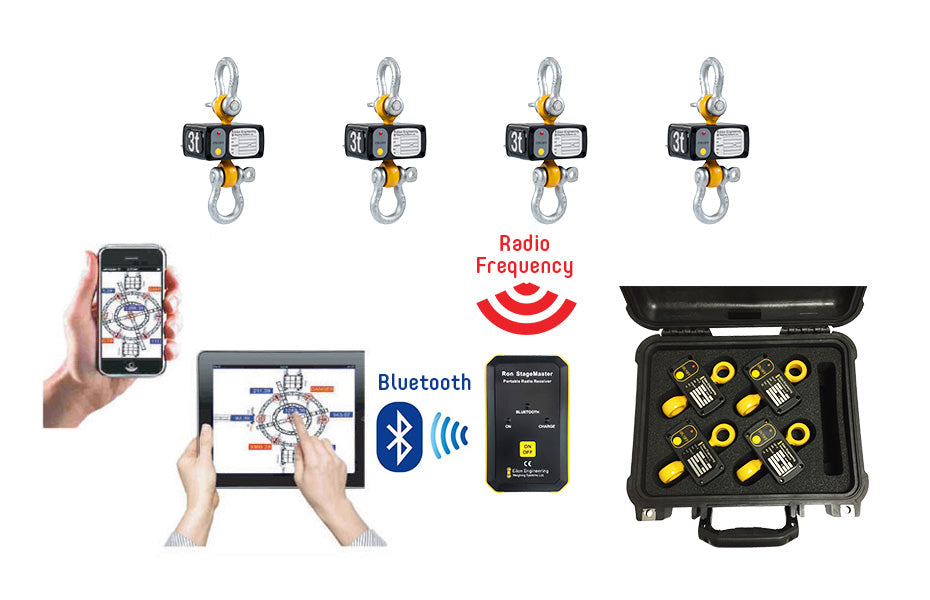
Supporting safer decisions with modern monitoring platforms
As stage productions become increasingly sophisticated, many venues and touring companies are incorporating digital monitoring technologies into their rigging workflow.
Modern multi-point load monitoring platforms allow engineers to observe multiple suspension points from a centralized interface while recording operational data throughout the event.
For example, systems such as the Ron™ StageMaster Multi-Point Load Monitoring System combine load cells, graphical visualization, configurable alarms, and digital reporting to support engineers responsible for complex entertainment rigging installations.
Rather than replacing engineering calculations or physical inspections, these systems provide additional information that supports safer operational decisions during installation, rehearsals, and live performances.
Who benefits most from better load visibility?
|
Role |
Primary Benefit |
|
Head Rigger |
Better understanding of load distribution during installation |
|
Structural Engineer |
Additional verification of engineering assumptions |
|
Production Manager |
Faster identification of operational issues |
|
Venue Manager |
Improved oversight of permanent rigging systems |
|
Safety Manager |
Better documentation and operational transparency |
|
Touring Production Manager |
More consistent rigging verification across multiple venues |
Frequently asked questions about preventing truss overload
Can a truss become overloaded even if the total suspended weight is below its rated capacity?
Yes.
One of the most common misconceptions in entertainment rigging is that total suspended weight is the only factor that matters.
In reality, uneven load distribution, suspension point spacing, concentrated loads, and dynamic movement can create localized overload conditions even when the overall weight remains within the published capacity.
This is why engineering calculations evaluate not only total weight but also how loads are applied throughout the structure.
What is the most common cause of truss overload?
There is rarely a single cause.
Overloads more often results from several small factors occurring together, including:
- Equipment changes during production
- Incorrect weight estimates
- Uneven load distribution
- Dynamic movement
- Poor communication between departments
- Installation differences between venues
Managing these variables consistently is one of the primary responsibilities of the rigging team.
How can production teams reduce the risk of uneven load distribution?
Good planning is the first step.
Production teams should:
- Verify equipment weights.
- Follow approved rigging plots.
- Review production changes.
- Coordinate between departments.
- Confirm installation matches engineering documentation.
For more complex productions, many organizations also use multi-point monitoring to verify actual load distribution during installation and operation.
Should truss loads be checked only during installation?
Not always.
For productions involving moving trusses, automated scenery, performer flying systems, or changing environmental conditions, load distribution may change after installation is complete.
Many organizations therefore continue monitoring during rehearsals and live performances.
Does wind affect truss loads?
Yes.
Outdoor events require additional consideration because wind can introduce forces that differ significantly from static loading assumptions.
Large LED walls, banners, scenic elements, and temporary roof structures may all be affected by changing weather conditions.
Operational procedures should always account for environmental factors.
Is visual inspection enough to identify overload conditions?
Visual inspections remain an important part of every rigging program.
However, not all changes in load distribution are visible.
Objective measurements provide additional information that supports engineering evaluations, particularly during complex or dynamic productions.
When does multi-point load monitoring provide the greatest benefit?
Multi-point monitoring becomes particularly valuable when productions include:
- Multiple suspension points
- Large truss grids
- Touring productions
- Temporary outdoor stages
- Automated movement
- Large LED structures
- Broadcast productions
- Complex entertainment venues
These environments benefit from improved visibility across the entire rigging system rather than isolated measurements.
Does continuous monitoring replace engineering inspections?
No.
Engineering inspections, structural calculations, equipment certification, and qualified personnel remain essential.
Continuous monitoring supports these activities by providing operational information throughout the production rather than at isolated inspection points.
Can monitoring data support post-event analysis?
Yes.
Historical measurement data allows production teams to:
- Review operational performance.
- Investigate unusual events.
- Compare venues.
- Improve future rigging plans.
- Support preventive maintenance.
- Strengthen documentation.
Historical information is often just as valuable as live monitoring during long-term production planning.
What should organizations look for when selecting a load monitoring solution?
When evaluating monitoring technologies, consider:
- Scalability
- Wireless reliability
- Ease of deployment
- Graphical visualization
- Alarm management
- Data logging
- Integration with existing workflows
- Technical support
- Long-term serviceability
The most appropriate solution depends on the complexity and operational needs of each production.
The future of truss safety
Entertainment rigging continues to evolve alongside advances in automation, digital engineering, and live event technology.
Today's production teams are expected to deliver increasingly sophisticated experiences while maintaining high safety standards and working within compressed production schedules.
As a result, the industry is gradually shifting from reactive inspection toward proactive verification.
Emerging technologies are helping engineers better understand how rigging systems perform under real operating conditions through:
- Digital engineering workflows
- Real-time monitoring
- Cloud-based reporting
- Predictive maintenance
- Automated documentation
These technologies do not replace engineering expertise.
Instead, they provide experienced professionals with better information for making informed operational decisions.
Final thoughts
Preventing truss overload is about more than staying below a published weight limit.
Safe entertainment rigging depends on understanding how loads are distributed, how they change throughout a production, and how engineering assumptions compare with real-world operating conditions.
By combining accurate engineering calculations, disciplined planning, thorough inspections, effective communication, and structured verification procedures, production teams can significantly reduce the likelihood of unexpected loading conditions.
For productions involving multiple suspension points, dynamic movement, or changing venue configurations, many organizations also incorporate modern load monitoring technologies into their workflow to improve operational awareness and support more informed decision-making.
Ultimately, the goal is not simply to avoid overloads—it’s to create a safer, more predictable environment where engineers, riggers, performers, and audiences can have confidence in the rigging system supporting every live event.
Looking to improve visibility across your rigging system?
As productions become larger and more technically demanding, many entertainment organizations are complementing traditional engineering practices with multi-point load monitoring systems that provide real-time insight into load distribution, configurable alerts, and digital reporting.
If you're evaluating technologies for concerts, theaters, arenas, broadcast studios, or touring productions, learn how dedicated stage rigging load monitoring solutions can support safer and more efficient entertainment rigging workflows.
→ Explore Eilon Engineering's Stage Rigging Load Monitoring Solutions
